In short,
- Early detection is crucial for effective scoliosis treatment for teenager patients.
- Bracing often prevents curve progression in growing adolescents.
- Surgery is considered for severe, progressive spinal curves.
Early intervention plays a pivotal role in managing scoliosis in teenagers, as it significantly impacts treatment outcomes. By identifying the condition early, healthcare providers can implement strategies that help prevent further progression and address spinal curvature effectively.
Understanding Scoliosis in Teenagers: Overview, Causes, and Risk Factors
Adolescent idiopathic scoliosis (AIS) is the most common type of scoliosis, according to the National Institutes of Health (NIH). AIS involves a sideways curve of the spine, often with rotation, which can affect posture. Early identification is vital for effective scoliosis treatment for teenage patients.
What is Scoliosis?
Scoliosis is a three-dimensional spinal deformity that causes the spine to curve sideways into an “S” or “C” shape. This can result in uneven shoulders or hips. The AANS reports that scoliosis affects 2-3% of adolescents, with girls being more likely to require treatment.
Causes and Risk Factors
The exact cause of AIS is unknown, but genetics and rapid growth are contributing factors. Key risk factors include:
- Age: Most common in teenagers aged 10-18.
- Sex: Girls are eight times more likely to have progressive curves.
- Family History: A genetic predisposition to scoliosis.
Identifying the causes and risk factors of AIS is essential for early detection and effective management.
Recognizing the Signs: Symptoms and Diagnosis
Early detection is crucial for timely scoliosis treatment, especially for teenage patients, as it can significantly improve outcomes and prevent the condition from worsening. Many cases are first identified during routine school screenings or physical exams, where subtle signs like uneven shoulders or an asymmetrical waistline can be spotted.
Parents may also notice changes in posture, such as a tilted spine or one hip appearing higher than the other, prompting further evaluation by a healthcare professional.
Common Symptoms of Scoliosis
Scoliosis can present with a variety of physical signs that may indicate the need for further evaluation.
- Uneven shoulders or hips
- A prominent shoulder blade
- Uneven waist
- A rib hump visible when bending forward
- Leaning to one side
While pain is not always an initial symptom, it can occur in some cases.
When to Seek Care
If you notice any signs of scoliosis in a teenager, or if an existing curve appears to worsen, consult a healthcare professional promptly. Severe or worsening back pain, especially if accompanied by numbness or weakness, requires immediate medical attention.
The Diagnostic Process
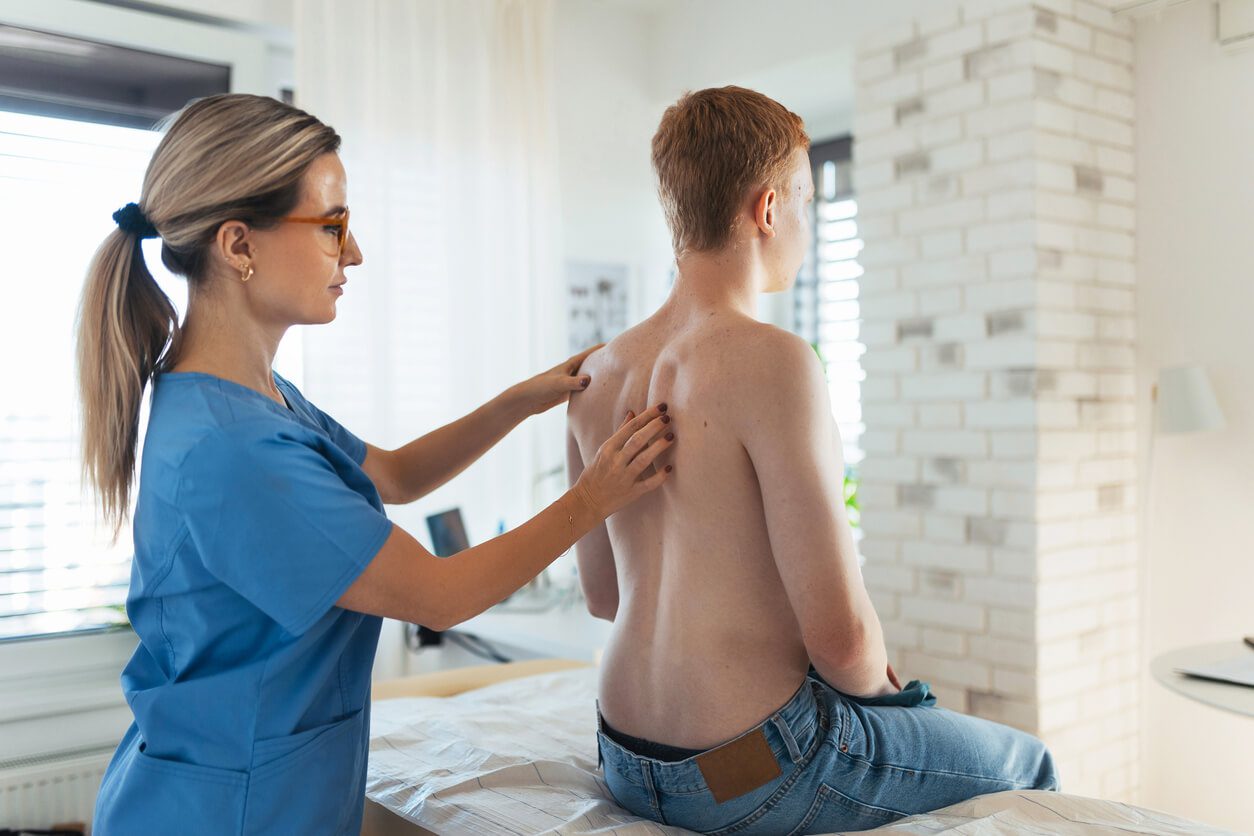
A healthcare professional will begin the diagnostic process by discussing the patient’s medical history and symptoms. Following this initial consultation, the diagnosis typically involves:
- Physical Exam: This includes the Adam’s forward bend test, a simple assessment commonly used to detect abnormalities in spinal alignment, such as scoliosis.
- X-rays: Confirm scoliosis and measure the curve’s severity (Cobb angle).
- Monitoring: Regular check-ups to track progression.
Navigating Treatment Options for Adolescent Scoliosis
Scoliosis treatment for teenage patients is highly individualized, depending on the curve’s severity, the patient’s age, and growth potential. The primary goal is to prevent curve progression and maintain spinal balance.
Observation and Monitoring
For mild curves (under 20-25 degrees), observation is common. This involves regular check-ups and X-rays every 4-6 months. Specific exercises may also support spinal health.
Bracing for Moderate Curves
Bracing is recommended for moderate curves (25-45 degrees) in growing teenagers. Worn daily, braces aim to prevent the curve from worsening. This is a common and effective scoliosis treatment for teenager patients.
Surgical Intervention for Severe Scoliosis
Spinal fusion surgery is considered for severe curves (over 45-50 degrees) that progress despite bracing or cause significant pain. The procedure involves rods and screws to straighten and stabilize the spine, fusing vertebrae to prevent further curvature.
Living with Scoliosis: Lifestyle and Support
Managing scoliosis goes beyond medical treatments. Healthy lifestyle habits and emotional support are vital for teenagers navigating this condition.
Practical Lifestyle Recommendations
- Engage in exercises like swimming or yoga to improve core strength and flexibility.
- Maintain good posture and avoid heavy backpacks.
- Follow a healthy diet to support overall spinal health.
Addressing Common Concerns
Scoliosis is not caused by bad posture or carrying heavy bags. Teenagers may worry about body image or sports participation, but most can lead active lives with proper management and support.
The Patient Journey: From Diagnosis to Long-Term Management
The journey with scoliosis involves continuous care, from diagnosis through treatment and into adulthood. Regular follow-ups ensure the spine remains stable and any potential issues are addressed promptly.
What to Expect After Diagnosis
After diagnosis, a treatment plan is developed, which may include observation, bracing, or surgery. Education, emotional support, and resources are essential for both patients and families.
Long-Term Outlook
Most teenagers with scoliosis lead normal, active lives. Long-term follow-up is crucial, especially after growth stops, to monitor for changes. Regular exercise and good posture contribute to sustained spinal health.
Frequently Asked Questions
Can scoliosis be corrected in teens?
Yes, scoliosis in teens can often be significantly improved or managed. Early intervention, such as bracing, is a common scoliosis treatment for teenager patients to prevent curve progression. While complete correction varies, significant improvement is possible. Consult your doctor for personalized advice.
Is 15 too late to treat scoliosis?
No, 15 is not too late. While bracing is most effective during rapid growth, other scoliosis treatment options for teenagers, like surgery, can still correct the spine effectively. Speak with your doctor to determine the best plan.
Can a teenager grow out of scoliosis?
No, teenagers typically do not “grow out of” scoliosis. Curves often worsen during growth spurts. Regular monitoring by a doctor is essential to track progression and determine if treatment is needed.
How can I prevent scoliosis from getting worse with age?
Preventing scoliosis from worsening involves early detection and proactive management. Bracing is a common scoliosis treatment for teenager patients to stop curve progression. Regular check-ups and specific exercises also help.
Scoliosis Treatment for Teenager Patients in Rochester Hills, MI
Specialized care is essential for teenagers with scoliosis. Our team, at Ahlgren Spine, provides expert diagnosis, personalized treatment plans, and compassionate support to ensure the best outcomes for spinal health and overall well-being.
Call us at (248) 215-8080 or use our online appointment request form to get started.
