
The best treatment for sacroiliac pain typically combines physical therapy, anti-inflammatory medications, and targeted injections. Most patients see significant improvement without surgery. Treatment success depends on the severity of joint dysfunction, the underlying cause, and how early care begins.
In short,
- Multiple treatment options exist. The best treatment for sacroiliac pain ranges from conservative therapies to minimally invasive procedures, depending on the severity of your condition.
- Physical therapy is a cornerstone. Targeted exercises reduce joint stress, restore stability, and address the muscle imbalances that drive SI joint dysfunction.
- Early intervention matters. Patients who seek care promptly tend to recover faster and are less likely to need advanced interventions.
Sacroiliac (SI) joint pain affects up to 30% of people with lower back pain, yet it often goes undiagnosed. The good news: the best treatment for sacroiliac pain does not require surgery in most cases.
This post covers proven therapies — from physical rehabilitation to minimally invasive procedures — so you can understand your options and take the next step toward lasting relief.
What Is Sacroiliac Joint Pain?
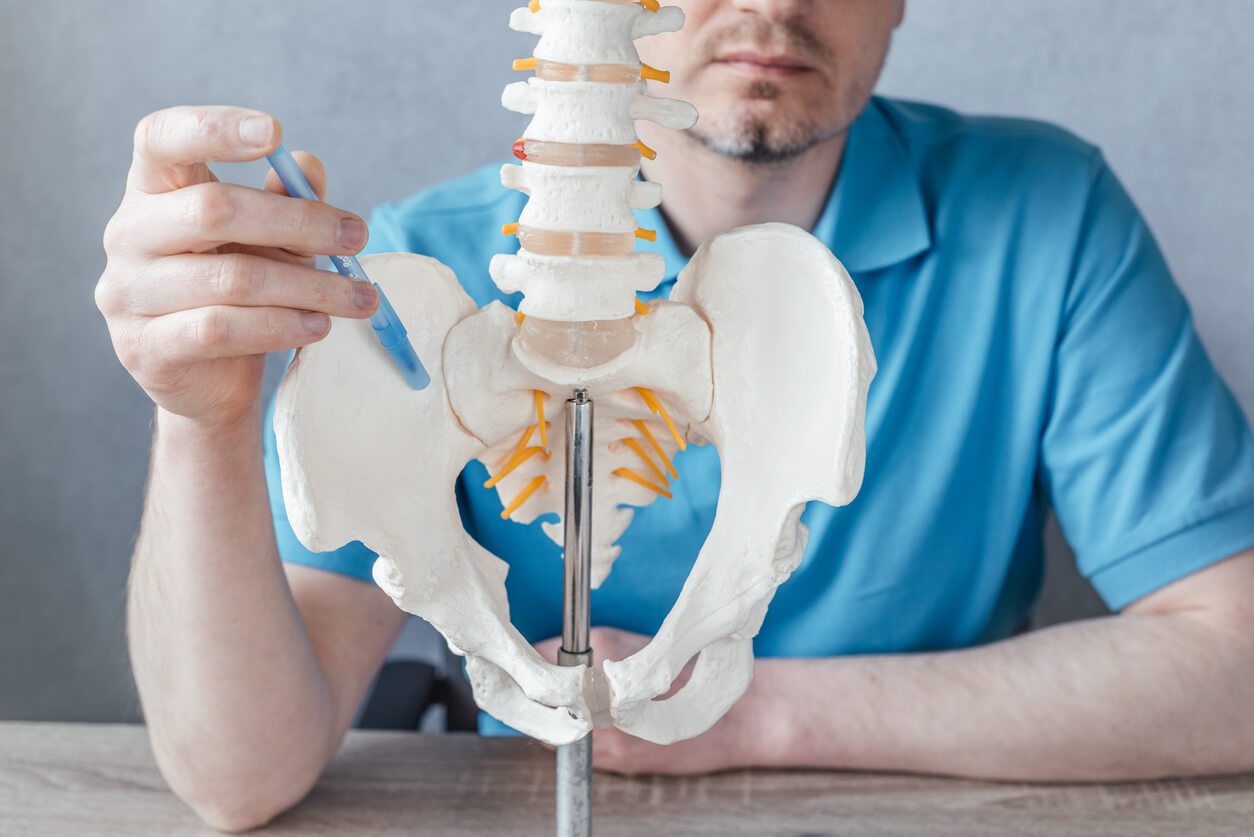
Sacroiliac joint pain originates where the sacrum — the triangular bone at the base of the spine — connects to the ilium of the pelvis. These two joints, one on each side of the lower back, absorb the force of walking, running, and lifting. When they become inflamed or move abnormally, the result is sharp, aching, or burning pain in the lower back, buttocks, groin, or upper thigh.
The condition affects both men and women but is more common during pregnancy due to hormonal changes that loosen pelvic ligaments.
Causes include trauma from a fall or vehicle accident, pregnancy-related joint laxity, leg length discrepancy, prior lumbar fusion surgery, and inflammatory conditions such as ankylosing spondylitis.
What Are the Most Effective Non-Surgical Treatments for Sacroiliac Pain?
The best treatment for sacroiliac pain typically begins with conservative, non-surgical approaches. Most patients achieve meaningful relief without ever needing a procedure.
How Does Physical Therapy Help Sacroiliac Joint Dysfunction?
Physical therapy is widely regarded as one of the most effective long-term strategies for managing SI joint pain. A licensed physical therapist designs a program that targets the specific muscles supporting the SI joint, including the gluteus medius, piriformis, and core stabilizers.
Common physical therapy interventions include:
- Joint mobilization — manual techniques that restore normal movement to a stiff or misaligned SI joint
- Strengthening exercises — targeted work for the hips, core, and lower back to reduce stress on the joint
- Stretching protocols — lengthening tight hip flexors and piriformis muscles that pull on the joint
- Gait retraining — correcting walking patterns that place an uneven load on the pelvis
What Role Do Medications Play in Treating SI Joint Pain?
Medications do not correct the underlying joint dysfunction, but they can reduce inflammation and pain enough for a patient to participate more fully in physical therapy.
Commonly used options include:
- Nonsteroidal anti-inflammatory drugs (NSAIDs) such as ibuprofen (Advil, Motrin) or naproxen (Aleve) — these reduce inflammation and provide short-term pain relief
- Muscle relaxants such as cyclobenzaprine (Flexeril) — helpful when muscle spasm accompanies joint dysfunction
- Topical analgesics such as diclofenac (Voltaren Gel) — applied directly to the painful area with fewer systemic side effects
All medications carry risks and should be used under a physician’s guidance, especially NSAIDs for patients with kidney disease, gastrointestinal conditions, or cardiovascular disease.
Can a Sacroiliac Belt Provide Relief?
A sacroiliac belt is a supportive brace worn around the hips to compress and stabilize the SI joints. It is particularly helpful for patients whose pain stems from joint hypermobility — excessive, abnormal movement — rather than stiffness.
Pregnant women and postpartum patients often benefit most from SI belts, as hormonal changes during pregnancy cause ligament laxity. The belt does not replace strengthening exercises but can reduce pain during daily activities while those muscles are being rebuilt.
What Injection-Based Treatments Work for Sacroiliac Pain?
When conservative measures do not provide sufficient relief, injection-based treatments offer the next level of care. These procedures are minimally invasive and are typically performed on an outpatient basis.
How Does a Sacroiliac Joint Injection Work?
An SI joint injection delivers a corticosteroid — a powerful anti-inflammatory agent — directly into the joint space, guided by fluoroscopy (real-time X-ray) or ultrasound. The corticosteroid reduces inflammation, while a local anesthetic provides immediate but temporary pain relief.
The injection serves two purposes: therapeutic and diagnostic. If the patient experiences significant pain relief following the injection, it confirms the SI joint as the source of the pain. Relief typically lasts from several weeks to several months, depending on the severity of the underlying inflammation.
Corticosteroids used in SI joint injections may include betamethasone (Celestone) or triamcinolone (Kenalog). Because repeated corticosteroid injections can weaken surrounding tissue over time, most physicians limit them to two or three per year.
What Is Radiofrequency Ablation for Sacroiliac Pain?
Radiofrequency ablation (RFA) is a procedure that uses heat generated by radio waves to disrupt the nerve signals transmitting pain from the SI joint to the brain. It is typically recommended for patients who experience good but short-lived relief from diagnostic nerve blocks.
RFA is not permanent. Nerves can regenerate over time, and the procedure may need to be repeated. However, for many patients, it provides substantially longer relief than injections alone.
When Is Platelet-Rich Plasma Therapy Considered?
Platelet-rich plasma (PRP) therapy involves injecting a concentration of the patient’s own platelets — which contain growth factors — into the SI joint to promote tissue healing. PRP is most appropriate when SI joint pain stems from ligament laxity or partial ligament tears rather than inflammatory arthritis.
The evidence base for PRP in SI joint treatment is growing. It is generally considered when more established treatments have not produced sufficient results and when the patient wishes to avoid surgery.
What Surgical Options Exist for Severe Sacroiliac Pain?
Surgery is reserved for patients with confirmed SI joint dysfunction who have not responded to at least six months of conservative treatment, including physical therapy and injections.
What Does SI Joint Fusion Involve?
SI joint fusion is a minimally invasive surgical procedure in which small titanium implants are inserted across the SI joint to promote bone fusion, eliminating the abnormal motion that causes pain. The iFuse Implant System (SI-BONE) is one of the most widely studied devices used for this purpose.
The procedure is performed through a small incision, typically under general anesthesia, and takes approximately one hour. Most patients go home the same day or the following morning. Full recovery and fusion generally take six to twelve months.
Patient selection is critical. Candidates must have imaging findings — such as a CT scan or an MRI — that confirm SI joint pathology, as well as documented relief from diagnostic injections prior to surgery.
How Is the Right Treatment for Sacroiliac Pain Chosen?
The best treatment for sacroiliac pain is not one-size-fits-all. The right approach depends on several factors:
- Duration of symptoms — acute versus chronic pain often responds to different treatments
- Cause of dysfunction — hypermobility, hypomobility, inflammatory arthritis, or post-surgical changes each require different strategies
- Prior treatment response — what has or has not worked before narrows the options
- Overall health — comorbid conditions affect which medications and procedures are safe
A spine specialist will combine a thorough physical examination, a review of imaging studies, and the results of diagnostic injections to build a personalized treatment plan.
Frequently Asked Questions (FAQ)
Because sacroiliac joint dysfunction can closely mimic other spinal conditions, an accurate diagnosis is key to finding relief. To help you understand your recovery options, here are our most frequently asked questions about choosing the best treatment for sacroiliac pain.
What is the fastest way to relieve sacroiliac joint pain?
Short-term relief often comes from rest, ice or heat application, over-the-counter NSAIDs such as ibuprofen (Advil), and gentle stretching. For faster and more sustained relief, an SI joint injection administered by a spine specialist can reduce inflammation directly at the source.
How long does it take for sacroiliac joint pain to go away?
Mild to moderate SI joint pain often improves within several weeks with physical therapy and medication. Chronic cases may take three to six months of consistent treatment. Patients with significant joint damage or instability may require longer-term management or procedural intervention.
Can sacroiliac joint pain come back after treatment?
Yes. SI joint pain can recur, particularly if the underlying cause — such as muscle imbalance, poor movement mechanics, or inflammatory disease — is not addressed. Maintenance physical therapy, activity modification, and regular follow-up with a spine specialist can reduce the risk of recurrence.
Is walking good or bad for sacroiliac joint pain?
Walking is generally beneficial in moderate amounts. It activates the muscles that stabilize the SI joint without placing excessive load on it. Patients should avoid prolonged walking on uneven surfaces during flare-ups and should consult a physical therapist about appropriate activity levels.
What makes sacroiliac joint pain worse?
Prolonged sitting or standing, climbing stairs, rising from a chair, rolling over in bed, and bearing weight on one leg tend to aggravate SI joint pain. Identifying and modifying these triggers is an important part of any treatment plan.
Find the Best Treatment for Sacroiliac Pain in Rochester Hills, Bad Axe, and Royal Oak, MI
The best treatment for sacroiliac pain occurs when the source of the pain is accurately identified, and the right combination of therapies is applied.
At Ahlgren Spine Orthopaedic Surgery, Dr. Ahlgren specializes in diagnosing and treating SI joint dysfunction with a full spectrum of options, from targeted physical therapy and precision-guided injections to minimally invasive surgical solutions.
Do not let SI joint pain limit your life. Schedule a consultation today by calling (248) 215-8080 and take the first step toward real, lasting relief.
